By Onomiguren Agbamu
A controversial and poorly coordinated screening exercise aimed at identifying over-aged and age-falsifying civil servants in Delta State has triggered widespread condemnation, following reports of disorganization, bribery, and even tragic deaths.
Targeted primarily at officers on salary Grade Levels 16 and 17, the screening has left many senior civil servants stranded, humiliated, and frustrated—raising serious questions about the competence and integrity of the process overseen by the Delta State Civil Service Commission.
Overnight Waits, Scattered Files, and a Breakdown in Process
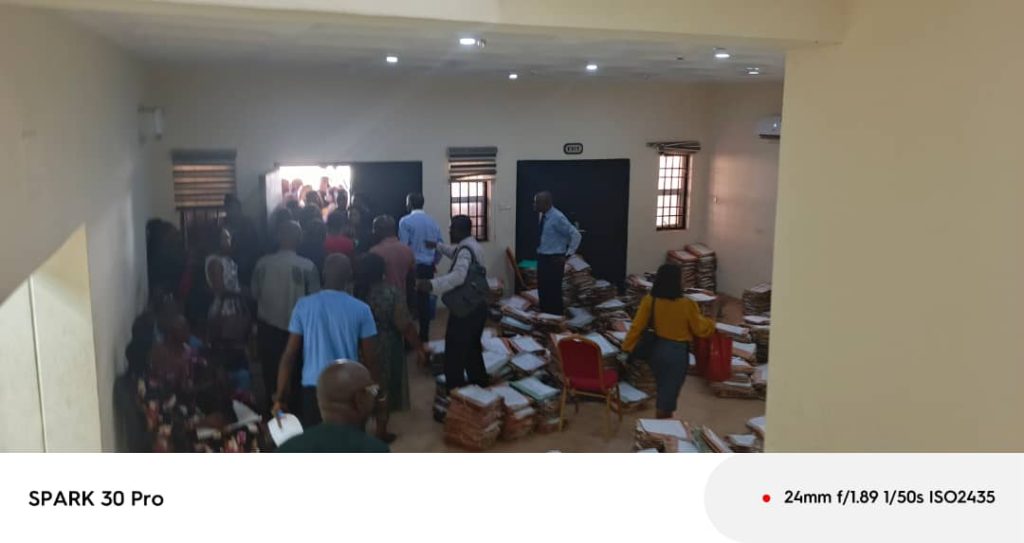
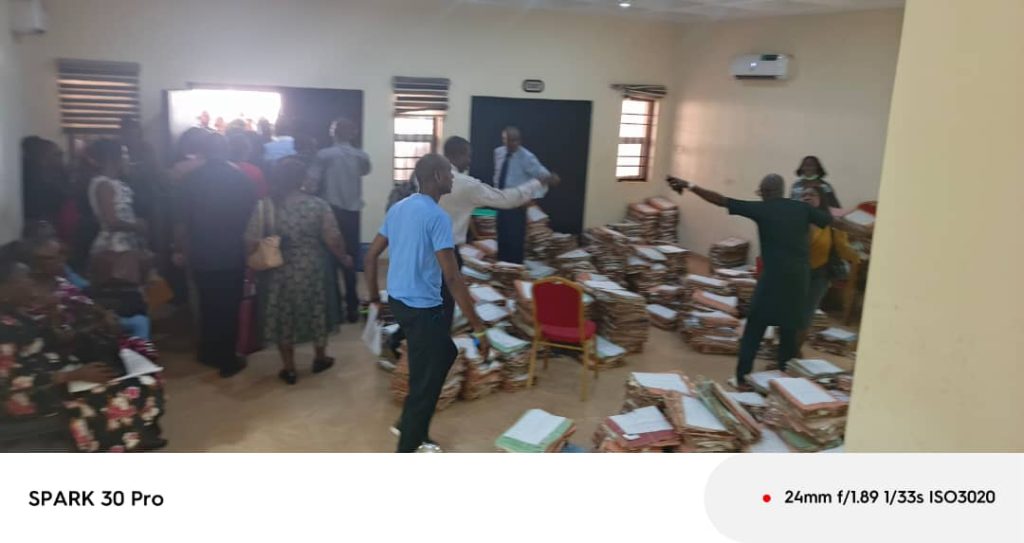
An investigative visit by The Story to the headquarters of the Civil Service Commission in Asaba revealed a chaotic environment, where senior officers were seen combing through disorganized piles of files in a desperate effort to locate their names and avoid forced retirement.
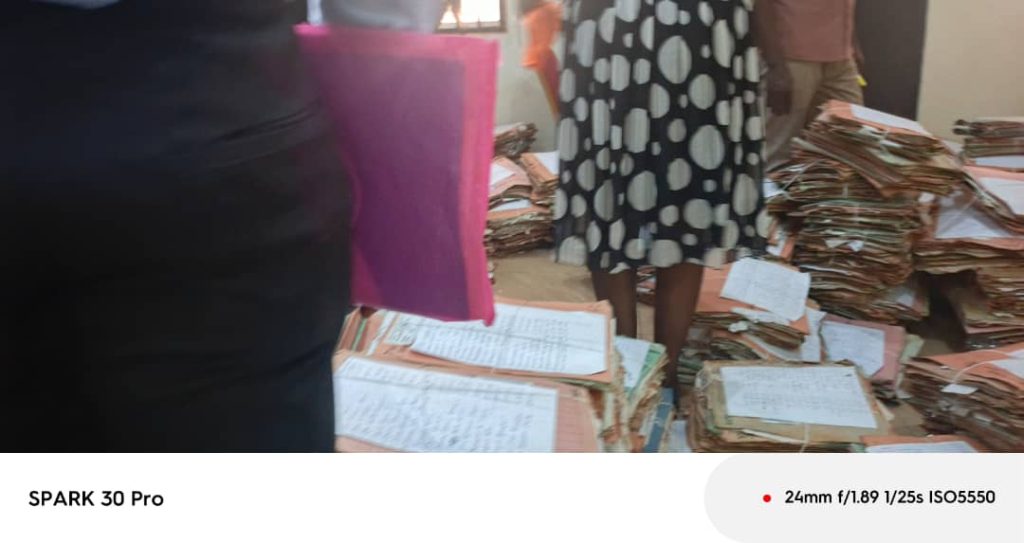
Rather than being arranged according to Ministries, Departments, and Agencies (MDAs), the files were reportedly dumped indiscriminately in the Commission’s reception area.
“It is disheartening,” lamented a senior officer who spoke on condition of anonymity. “Some of us have served this state for over 30 years. To be treated this way—without structure, dignity, or basic respect—is a disgrace.”
Reports also confirmed that many officers were forced to spend nights in hotels or sleep in vehicles near the venue due to the Commission’s poor planning.
Allegations of Bribery and Extortion
Further compounding the crisis, some civil servants alleged extortion by staff within the Office of the Head of Service. According to multiple sources, officers were being asked to pay bribes to locate or retrieve their personnel files.
“We are being made to go to the HoS office individually to search for our files, and some of us are being extorted in the process,” one affected officer claimed.
Deaths and Emotional Trauma
In a particularly disturbing development, sources confirmed that at least two civil servants reportedly died from shock after receiving abrupt retirement notifications—highlighting the emotional toll of the process and amplifying calls for immediate intervention.
“This screening is not just flawed—it is cruel,” said another civil servant. “There has to be a better way.”
Digital Records Ignored, Stakeholders Demand Reform
Stakeholders and analysts are questioning why the government is relying on outdated, manual methods when the Pre-Audit and Computer Center already houses a comprehensive digital database of all serving civil servants.
“It’s illogical,” said a source familiar with the state’s personnel systems. “Why subject people to this ordeal when their data is already digitally captured? It simply doesn’t add up.”
The debacle has sparked urgent calls for the full digitalization and automation of civil service records to eliminate future chaos and restore confidence in public sector reforms.
Public Outcry and Demand for Accountability
As public pressure mounts, critics argue that the Civil Service Commission has failed in its duty to conduct a transparent, humane, and effective exercise. While acknowledging the importance of rooting out age falsification and ghost workers, stakeholders insist it must not come at the cost of dignity, due process, or human lives.
“This workforce has undergone several screenings before—most recently under the Okowa administration,” noted one officer. “Why the sudden chaos now?”
The silence of the Commission, which has yet to issue an official statement, has only fueled suspicion and anger among affected officers and civil society groups.
Governor Oborevwori Under Pressure to Act
Many are now calling on Governor Sheriff Oborevwori to intervene directly, urging him to mandate the immediate suspension of the flawed process and order a comprehensive review.
Observers have also called on the Governor to take corrective action and ensure that any future reforms are carried out with the respect and efficiency befitting a professional civil service.
Contacted for a response, the Public Relations Officer (PRO) of the Delta State Civil Service Commission, Joy Christabel Sylvester, defended the ongoing screening of senior civil servants, stating that the exercise is strictly internal and not meant for public engagement.
“This is a private, in-house exercise, which is why it hasn’t been publicized,” Sylvester explained. “It concerns only civil servants and is being handled internally for their interest. That’s why it wasn’t put in the public space.”
According to her, the screening, targeting officers on Grade Levels 15 to 17, only commenced recently, and the commission is still in the early stages of the process.
“We started the exercise just yesterday. It’s still ongoing, and whatever issues arise, we will review them at the end.”
When asked why senior officers were being made to individually search for their files at the Office of the Head of Service, she responded that the process was not unusual.
“This has always been the procedure, even when we go for screenings at the HoS, we go through the same system,” she said, describing it as a routine in-house method.
Sylvester also revealed that the screening was initiated by directive of the state governor and is intended to verify the ages of civil servants and monitor the integrity of the commission’s workforce.
“We need to see our employees physically. If someone doesn’t show up when invited, it indicates they may no longer be in service,” she emphasized.
Addressing the issue of missing files, the PRO clarified that responsibility lies with the respective offices of the affected workers.
“These files are expected to come from the offices where the officers are posted. If they are missing, the affected individuals should contact their departments to ensure the files are forwarded to the Commission,” she said, noting that the Commission had already requested the files before the screening began.
She concluded by reaffirming the Commission’s commitment to reviewing the entire exercise thoroughly once it concludes.
About the Author