By Chuks Ododo
There is a pattern in Delta State politics that is as old as democracy itself in our land. It is a pattern so consistent, so deliberate, and so entrenched that to ignore it any longer would be an act of collective self-deception. Since 1999, when the curtain rose on the Fourth Republic, successive governors of Delta State have followed an unwritten but religiously observed template: prioritise their own, and let the rest survive on their discretion.
To understand where Ndokwa stands today, one must trace this template to its architect.
Ibori Set the Template — And Every Governor Has Perfected It
When Chief James Onanefe Ibori assumed office as Governor of Delta State in 1999, he did not hide his priorities. Approximately 70% of infrastructural project allocations during his tenure were directed at Delta Central, his senatorial district, and a disproportionate share of those projects found their way to his own community of Oghara. The remaining 30% was distributed across other senatorial districts not by design, not by equity, but by the Governor’s personal discretion and mercy.
This was not merely a political preference. It was the institutionalisation of a developmental philosophy built on the supremacy of the Governor’s will. There was no state-wide roadmap. There was no independent legislative oversight. The Delta State House of Assembly was rendered incapable of meaningfully challenging or redirecting executive project allocation. Power was consolidated. Development followed power.
When Dr Emmanuel Uduaghan succeeded Ibori in 2007, the script changed characters but not the plot. His tenure was widely acknowledged as the poorest in terms of infrastructural delivery since the state’s creation; nonetheless followed the same northward tilt toward Delta South, his own senatorial base. Whatever projects landed elsewhere were crumbs from a table he controlled alone.
Then came the drumbeats from the North. The people of Delta North mobilised with passion and determination, arguing rightly that equity demanded the governorship rotate to their zone. Against the odds, Dr Arthur Ifeanyi Okowa of Ika North East, representing Delta North, won the 2015 governorship election. The people of Ndokwa celebrated. Hope filled the air. Surely, it was now the North’s turn at the big table.
But what followed was a lesson that the Ndokwa people must never forget.
The Okowa Lesson: Ethnic Rotation Is Not Zonal Development
Governor Okowa’s developmental priority was not Delta North. It was Owa-Alero, his own village. Over 60% of key infrastructural development under his watch was concentrated in and around his immediate community. The rest of Delta North, including the Ukwuani, the Anioma, and other groups, received whatever Okowa, in his personal judgement, deemed fit to give them.
The painful irony is this: Okowa treated Ndokwa and other ethnic groups within Delta North no differently from how he treated the other senatorial districts. In his developmental calculus, they were all equally peripheral. Whatever projects reached Ndokwa came not from a plan, but from patronage. Not from priority, but from political sympathy.
The evidence is stark. Projects Okowa allocated within his own Owa-Alero community were diligently monitored and completed before he left office. Meanwhile, projects in Ndokwa communities, smaller in scope, modest in ambition, remained uncompleted, abandoned to the familiar excuses of “funding constraints” and “procurement processes.” The conclusion is inescapable: when a Governor is not one of you, completion of your projects is optional.
Sheriff and the Continuing Template
Governor Sheriff Oborevwori of Delta Central assumed office in 2023. It would be unfair to single him out for doing what every Governor before him has done. He inherited a template, and he is faithfully implementing it. According to available data, over 60% of his infrastructural allocations are directed at Delta Central. What other senatorial districts receive is, once again, at his discretion.
One particularly telling indicator is the tradition of university campuses. Every Governor since 1999 has ensured that a higher institution campus is situated in their senatorial district or home community, a legacy project, a monument to their tenure. Uduaghan was perhaps the exception, not for equity’s sake, but for the widely acknowledged limitations of his administration’s strategic vision. Governor Sheriff is now following this tradition faithfully, commissioning a brand-new university campus in his zone, even as public primary and secondary schools across the state crumble with a shortage of teachers, a shortage of infrastructure, shortage of hope.
The Kwale Industrial Park: Ground-breaking Without Groundwork
We are told to be grateful. We are told Governor Sheriff is doing much for Ndokwa because he hosted a ground-breaking ceremony for the Kwale Industrial Park. Politicians parade this gesture as evidence of the Governor’s love for our people.
But let us ask the question that every honest Ndokwa person must ask: How does an industrial park attract investors to a community that has not experienced a stable power supply in over fifteen years? What manufacturer, what entrepreneur, what serious investor will commit capital to a location where NEPA, as our people still call it, is little more than folklore?
The Kwale Industrial Park ground-breaking, without a corresponding commitment to electrification, road infrastructure, and basic utilities, is not development. It is a theatre.
The Institutional Deprivation of Ndokwa
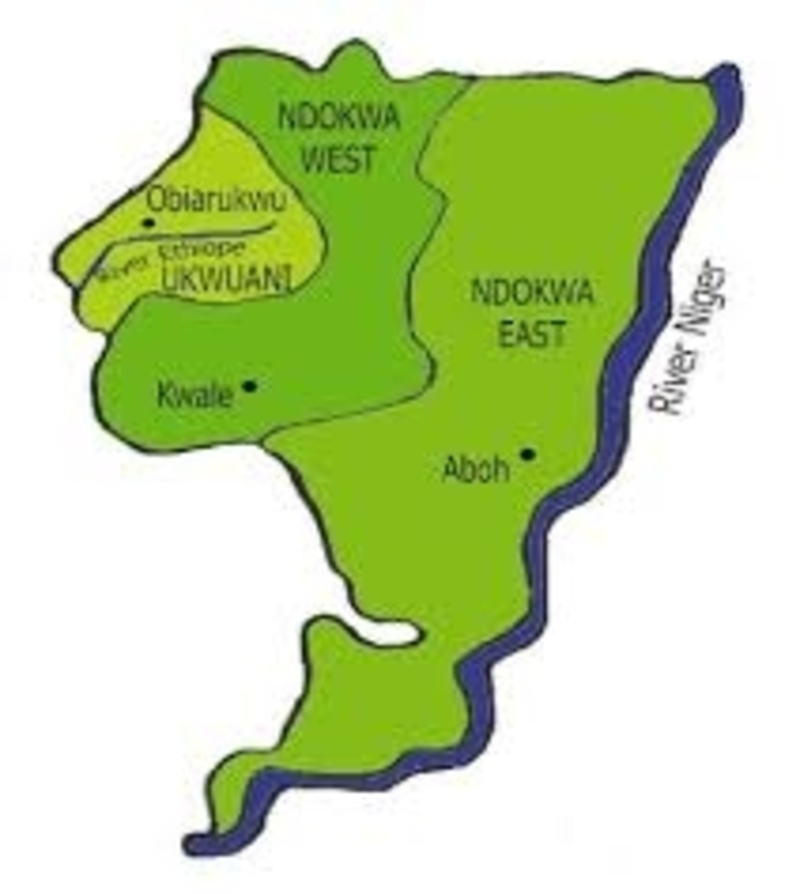
Among all the ethnic nationalities in Delta State, Ndokwa stands alone as the only group without a state government higher institution. While we celebrate the Federal University of Medical and Health Sciences, a federal institution that came largely through the legislative efforts of former Senator Ovie Omo-Agege, our people watch as a state-of-the-art university rises in Delta Central, a senatorial district already well-endowed with tertiary institutions.
Is Ndokwa’s infrastructural development a priority in Delta State? The honest answer is no. It never has been. Whatever we have received since 1999 has been the product of political negotiation at best, and gubernatorial charity at worst. Never policy. Never a priority.
The Prescription: An Ndokwa Governor
The Ukwuani people and the broader Ndokwa nation must now confront a truth that is uncomfortable but liberating: no Governor who is not from our land will ever make our development his priority.
This is not bitterness. It is data. It is the lived evidence of twenty-six years of Delta State governance. Every Governor Ibori, Uduaghan, Okowa, and Sheriff has prioritised their own. Not because they are bad people, but because that is what political power, in the absence of institutional accountability and a developmental master plan, naturally does. It gravitates toward the familiar. It rewards the home base.
For too long, the Ukwuani and Ndokwa people have entered every election cycle with hope anchored in the promises of Governors from other zones. For too long, we have played the role of loyal foot soldiers delivering votes, providing political cover, securing governorship victories, only to discover, after the inauguration dust settles, that our communities remain peripheral in the developmental calculus of those we helped enthrone.
Playing second fiddle and expecting first-class development is a contradiction that our people can no longer afford.
The template that Ibori set in 1999 is not going away. It will outlast every administration until the structural accountability of the Delta State executive is fundamentally reformed, a reform that no sitting Governor has any incentive to champion. In the absence of that reform, the only medicine for Ndokwa’s developmental neglect is a Ndokwa Governor.
Not a sympathetic Governor. Not a Governor who owes us political debts. An Ndokwa son or daughter, sitting in Government House, Asaba, with the same power that every Governor has wielded since 1999, the power to decide, to prioritise, to build.
A Call to Ndokwa Politicians and People
The time for strategic self-awareness is now. Ndokwa politicians must stop presenting political patronage as development. They must stop telling our people to be grateful for ground-breaking ceremonies without foundations. They must stop celebrating the Governor’s “visits” as development. They must begin clearly, boldly, and strategically working toward the singular goal that the evidence of history demands: producing a Governor from Ndokwa.
This requires unity of purpose across Ndokwa communities. It requires Ukwuani, Kwale, and all our people to look beyond immediate political benefits and short-term patronage. It requires our best minds, our political capital, and our collective will to be invested in a long-term project of governance capture, not for dominance, but for survival. For development. For equity.
The Ika people understood this when they backed Okowa. The Delta Central people have understood this since 1999. It is time Ndokwa understood it too.
We have waited on the mercy of other men’s governorship for a generation. That mercy has built universities elsewhere. It has built roads elsewhere. It has built legacies elsewhere.
Ndokwa’s turn is not coming as a gift. It must be claimed.
Chuks Ododo writes as a global citizen and is a commentator on governance, politics, and development in the Niger Delta region.
About the Author