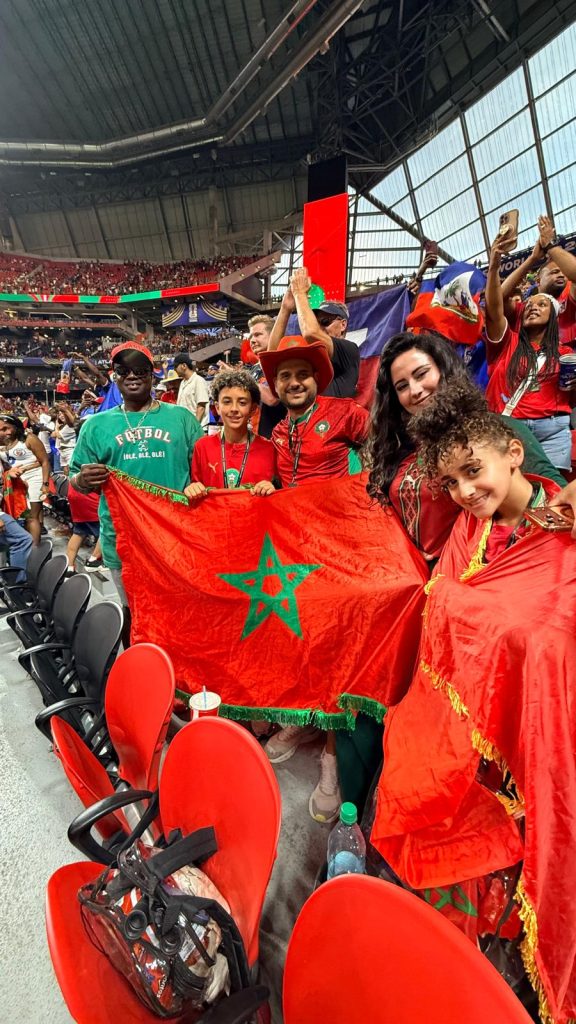
Former Nigeria international Paul Lucky Okoku has reflected on a remarkable full-circle moment in his football life after witnessing Morocco’s dramatic 4-2 comeback victory over Haiti at the 2026 FIFA World Cup, a match that rekindled memories of his senior international debut against the Atlas Lions more than four decades ago.
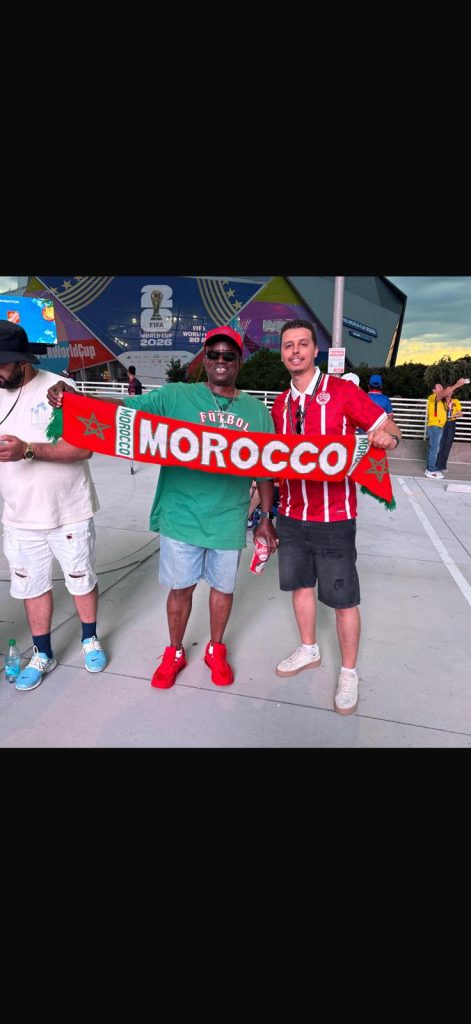
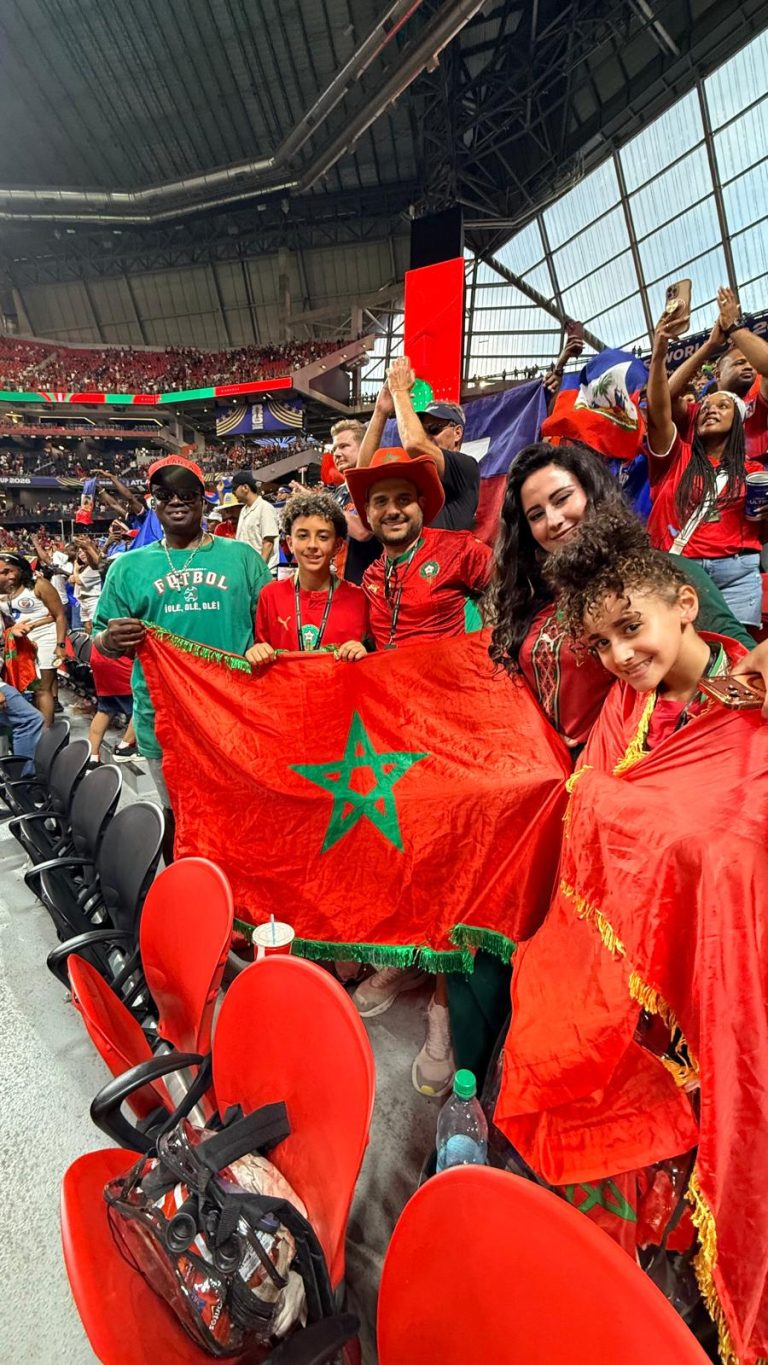
Watching from the stands at a packed Mercedes-Benz Stadium, Okoku said the Group C encounter was more than just another World Cup fixture—it was the continuation of a football journey that began in Rabat, Morocco, in 1983.
“My first senior international match for Nigeria came against Morocco,” Okoku recalled. “Forty-three years later, I found myself watching Morocco again—not as an opponent, but as a former international player, football analyst and FIFA Legend honoree.
Football had truly come full circle.”
The June 24 contest delivered one of the tournament’s most entertaining spectacles as Haiti twice stunned the African side by taking the lead before Morocco rallied to secure a deserved 4-2 victory and book a place in the Round of 32.
After Haiti opened the scoring inside 10 minutes, Morocco equalized through Achraf Hakimi before the Caribbean nation regained the advantage.
A crucial Moroccan equalizer deep into first-half stoppage time shifted the momentum, and the Atlas Lions dominated the second half, scoring twice more to complete the comeback.
Okoku said Morocco’s resilience and composure reflected the qualities of an experienced tournament side.
“Champions are not those who never fall behind,” he wrote. “Champions are those who know how to respond when they do.”
Statistics reinforced Morocco’s superiority, with the Atlas Lions controlling nearly 70 percent possession, registering 19 shots to Haiti’s seven, producing 12 efforts on target, winning nine corner kicks and completing more than 90 percent of their passes.
Yet Okoku reserved equal praise for Haiti, whose fearless display earned admiration despite the defeat.
“They showed courage, organization and attacking ambition,” he said. “Twice they led one of Africa’s strongest national teams. They were not there simply to participate—they came to compete.”
The former Super Eagles winger also explained why he proudly supported Morocco throughout the evening, wearing the country’s colours and standing alongside Moroccan supporters.
“The flag was Moroccan. The pride was African,” he wrote. “When Morocco played, Africa played.”
While celebrating Morocco’s success, Okoku admitted Nigeria’s absence from a second consecutive FIFA World Cup remained a painful reminder of the country’s recent struggles.
Throughout FIFA Legends Week, he said, supporters from around the world repeatedly asked why Nigeria was missing from the expanded 48-team tournament.
“The World Cup doesn’t feel quite the same without Nigeria,” he recalled hearing from football fans.
Okoku believes Nigeria’s absence should serve as motivation for meaningful reforms, emphasizing that long-term planning, stable leadership and sustained investment remain essential for the Super Eagles’ return to football’s biggest stage.
He also praised the continued progress of African football, pointing to Morocco’s sustained rise alongside countries such as Ghana, Côte d’Ivoire, Senegal and South Africa as evidence that the continent is closing the gap on the traditional powers of Europe and South America.
For Okoku, however, the evening’s greatest significance was deeply personal.
He recalled how he, Chibuzor Ehilegbu and the late Isa Shofoluwe were unexpectedly promoted from Nigeria’s Flying Eagles to the senior Green Eagles squad for the decisive 1983 Africa Cup of Nations qualifying match in Rabat. All three played as Nigeria advanced on penalties, creating a lifelong connection between Okoku and Moroccan football.
More than four decades later, watching the Atlas Lions once again on football’s biggest stage completed a journey he never imagined.
“As I left Mercedes-Benz Stadium, I realized I had witnessed more than Morocco’s victory over Haiti,” Okoku said. “I had witnessed football completing a circle that began in Rabat in 1983 and continued in Atlanta in 2026.
“Matches end. Memories endure. The journey of football continues.”
About the Author