Nduku Ogume: A Tradition of Thanksgiving
By Dr Ojodume Okuguni
A secular humanist’s reflection on how ancestral thanksgiving unites Nigerians across faiths
In Nigeria today, many of us live at the crossroads of tradition and modernity. Western education, professional life, and global exposure often seem to demand that we leave behind the rituals of our ancestors. Yet I have found that ancestral thanksgiving, far from being a relic of superstition, remains a vital practice — one that can unite families and communities across lines of faith and worldview.
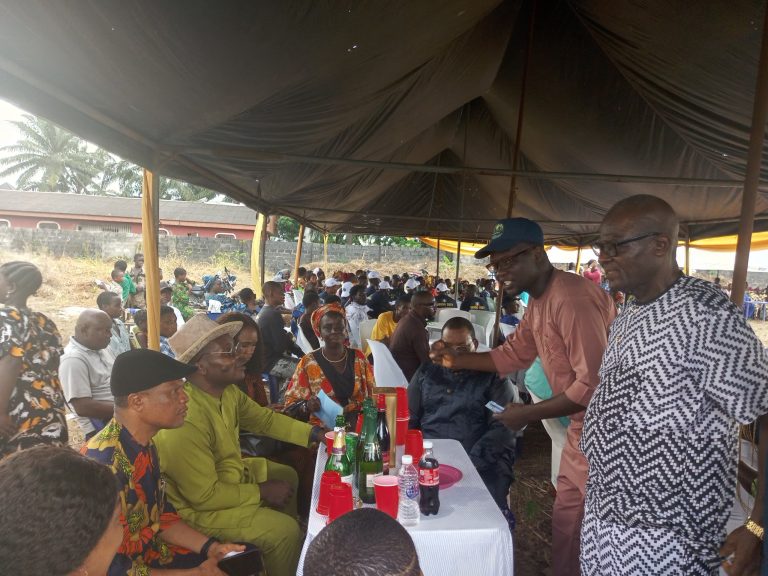
I am a secular humanist. I do not believe in gods or spirits. But I am also a Nigerian, proud of my Ukwuani people’s cultural identity. Each year, in observance of our tradition, Ogume people of Ukwuani land gather as extended families for ancestral thanksgiving during the Nduku festival. Of particular significance in the expression of gratitude is that of sons-in-law, who married from the family. They come with items of food and drinks to show gratitude to the family that gave them a wife. For me, this is not worship in the religious sense. It is gratitude — gratitude to those who came before us; who built the foundations of our lives, including with their sweat and blood, shed to acquire the ancestral lands we call our own today; who carried our traditions through hardship and triumph.
Gratitude is universal. Whether one prays in church, mosque, shrine, or not at all, we all should recognize the debt we owe to our forebears.
In those moments when people of different faiths join in this thanksgiving, belief systems fade into the background. What remains is a community united not by doctrine, but by shared humanity and heritage.
Tradition is not static. It evolves with each generation. By reinterpreting ancestral observances as cultural heritage rather than religious obligation, we preserve their beauty while opening them to all. This reinterpretation does not diminish the practice; it enriches it. It allows Christians, Muslims, and non-believers alike to participate without conflict, each finding meaning in their own way.
Some assume that Western education and professional training should lead us to abandon indigenous practices. But education does not demand cultural erasure. On the contrary, it equips us to see tradition with fresh eyes, to separate enduring values from dogma. In my case, it has allowed me to reclaim ancestral thanksgiving as a ritual of unity, gratitude, and identity.
I do not seek to lead a movement. At seventy-two, my role is simply to live authentically and let my example speak. Yet I have noticed that others in my community, especially those with similar educational backgrounds, are beginning to hold their own ancestral thanksgivings. This gives me hope. It suggests that our culture can adapt, finding new life in forms that resonate across belief systems.
My vision is simple: Ancestral thanksgiving as a celebration of our shared humanity and heritage. A ritual where Christians, Muslims, and atheists can stand together, honouring the memory of those who paved the way for us, and committing ourselves to those yet to come. It is not about spirits or gods. It is about people — past, present, and future — bound together in gratitude.
Ancestral thanksgiving is not about spirits or gods, but about people — past, present, and future — bound together in gratitude; for when we give thanks to those before us, we strengthen the bonds of those beside us, and prepare the path for those yet to come.
Ojodume Okuguni is a Nigerian medical practitioner and secular humanist.
About the Author