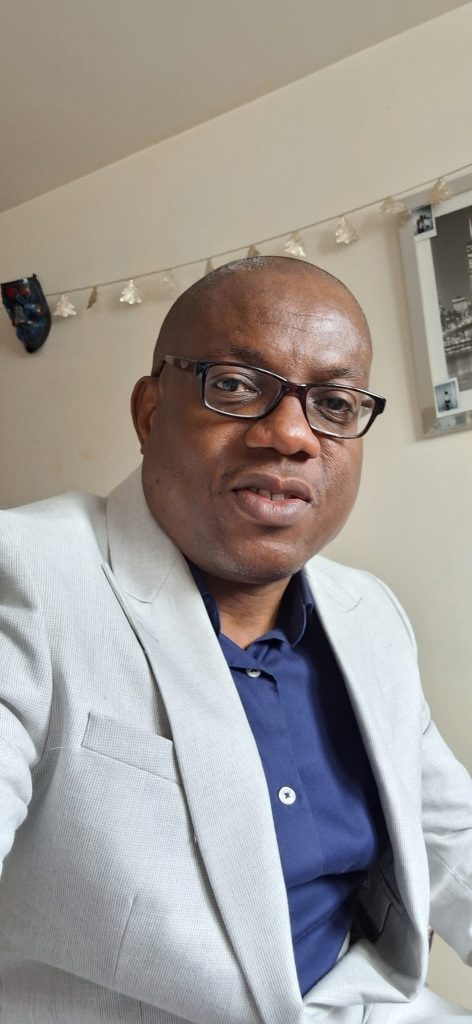
By Ambassador Chuks Ododo
Introduction: A Wake-Up Call, Not a Complaint
There is a particular kind of frustration that arises when people possess potential but lack the strategic framework to convert it into power. That is precisely the situation facing the Ndokwa people of Delta State, Nigeria, today.
In recent weeks, social media has been awash with commentary, some passionate, some misguided, questioning why prominent Ndokwa leaders are not mounting a visible challenge to former Governor Ifeanyi Okowa ahead of the 2027 senatorial contest for the Delta North Senatorial District. Some voices have gone further, calling out respected figures such as Chief Okenmor Tilije, the current Commissioner for Finance in Delta State, for what they perceive as political timidity or misplaced loyalty.
With respect to these criticisms, however well-intentioned betray a fundamental misunderstanding of how power is structured, inherited, and exercised in Delta State and in Nigerian politics more broadly. Understanding this structure is not optional for the Ndokwa people. It is the first and most essential step toward changing it.
Understanding the Architecture of Delta State Politics
Delta State’s political landscape operates according to an unwritten but deeply entrenched principle: the highest-ranking political officeholder from any zone, senatorial district, or local government area automatically assumes and retains the position of political leader for life, or until a successor of greater political stature emerges to displace them.
This is not merely tradition. It is a functioning power architecture that governs alliances, appointments, resource allocation, and the distribution of political capital across the state.
Applying this principle to Delta North is instructive. Former Governor Ifeanyi Okowa, having served as the only Governor produced by the Delta North Senatorial District, is, by this configuration, placed as the undisputed political leader of the district, and by extension, a dominant force in state-wide politics. No other political figure from Delta North, regardless of their personal ambition, financial standing, or community support, currently occupies a political office of equivalent or superior weight. Until someone does, Okowa sits atop the political hierarchy of Delta North by default.
Within Ndokwa specifically, the current Deputy Governor, Sir Monday Onyeme, is by the same logic the highest-ranking Ndokwa political officeholder, and therefore the de facto political leader of the Ndokwa people. Yet even he, occupying the second-highest executive office in the state, remains structurally subordinate to Okowa within the broader Delta North configuration.
Why Challenging Okowa is Political Suicide for Now
This brings us to the difficult but necessary truth: no political leader from Ndokwa is presently positioned to mount a credible challenge to Okowa, not because they lack personal merit, but because the political architecture does not support it.
In Nigerian politics, openly challenging a superior within your political structure is not merely an act of ambition. It is perceived as an act of rebellion, and it is punished accordingly. The political consequences can be swift and severe: marginalisation, loss of access to patronage networks, withdrawal of support from the very community you seek to serve, and, in the most extreme cases, a permanent end to one’s political career. To put it plainly, challenging your political boss without the structural capacity to win is not courage. It is, at best, a gamble and at worst, political self-destruction.
Those calling on Ndokwa leaders to rise and confront Okowa on social media are, perhaps unknowingly, urging those leaders to walk into a battle without weapons, resources, or allies. That is not a strategy. That is a sacrifice without purpose.
The Futility of Sympathy Politics and Social Media Outrage
Let us be equally direct about something else: social media activism, emotional appeals, and sympathy politics have never and will never reconfigure a political structure built on institutional power, financial muscle, and strategic alliances.
The comments circulating online, however passionately expressed, do not shift a single delegate, influence a single governor, or move a single naira of political investment. They generate noise, but not movement. They signal grievance, but not power.
Ndokwa’s challenge is not one of visibility. It is one of strategic depth. And no amount of online agitation will substitute for what is genuinely required: intentional, long-term, and heavily resourced political investment.
What Genuine Political Disruption Actually Requires
If the Ndokwa people are serious, not merely vocal, about reconfiguring the current political landscape, then a clear-eyed and honest conversation must be had about what that actually demands.
First, Ndokwa must aspire to produce a Governor. Not a commissioner. Not a special adviser. A Governor. The governorship is the apex of executive power in any Nigerian state, and it is the office that controls the discretionary allocation of state resources, the direction of infrastructure investment, and the composition of the political landscape for years to come. Without a Governor, Ndokwa will remain in the queue behind those who have already produced one.
Second, this ambition requires billions, not slogans. The brutal reality of Nigerian politics is that power does not respond to moral arguments alone. It responds to financial capacity, organisational infrastructure, and the ability to mobilise credible political actors across multiple constituencies. Ndokwa leaders, businesspeople, diaspora communities, and professionals must be willing to invest heavily and collectively in a long-term political project. That investment must be coordinated, strategic, and sustained across electoral cycles.
Third, Ndokwa must build bridges beyond its own borders. No ethnic group in a multi-ethnic state wins a governorship alone. It requires coalition building, reaching across ethnic, religious, and regional lines to construct alliances with communities that share complementary interests. Ndokwa must cultivate genuine partnerships with political actors from other Delta zones, identify shared political objectives, and be willing to support others’ aspirations in return for support of their own. Politics is, at its core, the art of the deal.
Fourth, Ndokwa must prioritise competence over loyalty. One of the most persistent weaknesses in community-based politics is the tendency to elevate loyalty to political patrons above the qualities of character, competence, and capacity. Ndokwa must break this cycle. The individuals Ndokwa projects into political office must be capable of governing, commanding respect across ethnic boundaries, and delivering outcomes that validate the investment the community has made in them.
Fifth, exploring alternative party structures must be on the table. Where the dominant political structure continues to constrain Ndokwa’s advancement, it may be necessary to work through alternative party frameworks or cross-party alliances that create different pathways to power. Political orthodoxy should never be allowed to become a ceiling.
Senator Okowa is Not the Problem
Let me state this plainly, as I have done before: Senator Okowa is not Ndokwa’s problem.
He is a product of a political system that rewards those who play it most effectively. He has done precisely what any skilled political actor would do: build his political capital, secure his legacy, and position himself within a structure that protects and perpetuates his influence. One may agree or disagree with his political decisions, but one cannot honestly accuse him of violating the rules of a game he has simply played better than his competitors.
The problem is not Okowa. The problem is Ndokwa’s current unwillingness or unreadiness to invest in the kind of political infrastructure that would give its people the leverage to negotiate from a position of strength rather than supplication.
Conclusion The Time for Strategy is Now
Ndokwa is not without capacity. It is without coordination. It is not without talent. It is without a collective political project. It is not without resources. It is without the willingness to deploy those resources in a disciplined, strategic, and long-term way.
The path forward is not through social media grievance. It is through intentional political architecture, identifying and nurturing candidates of the highest quality, building financial war chests, forging alliances with other ethnic and regional political blocs, and projecting Ndokwa’s best representatives into the offices that matter most.
The clock is ticking. 2027 is closer than it appears. The question is not whether change is possible; it is whether Ndokwa is ready to do what change actually requires.
Ambassador Chuks Ododo is a community development advocate and current affairs analyst based in the United Kingdom. He writes regularly on governance, politics, and community empowerment in the Niger Delta region.
About the Author