By Onomiguren Agbamu
The Delta State Government on Monday unveiled a $100 million Viability Guarantee Fund and announced tax incentives for investors as part of a broader strategy to attract local and foreign investment, diversify the state’s economy, and create sustainable jobs.
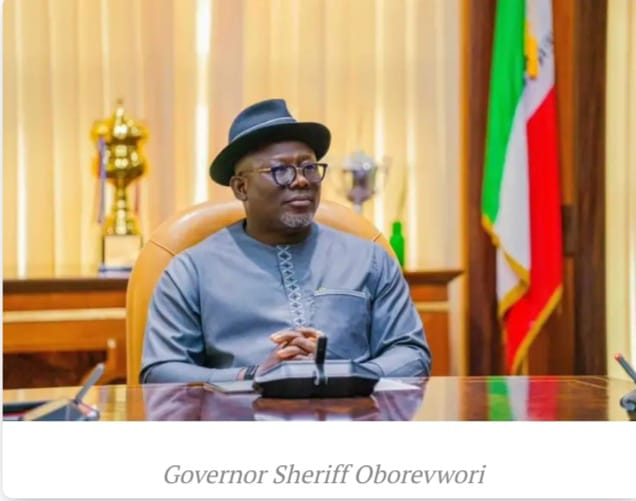
The Governor disclosed these initiatives at the opening ceremony of the Delta State Economic and Investment Summit, held at the Dome Event Centre in Asaba, the state capital.
Oborevwori also said the initiative is an action-oriented platform designed to connect investors with viable business opportunities across the state.
He said, “This summit is not a talk show, but it is about matching vision with action and building partnerships that will transform the economy of Delta State.”
Oborevwori noted that his administration had made deliberate investments in roads, security, education, and other critical infrastructure to improve the state’s investment climate.
He said Delta accounts for about 40 per cent of Nigeria’s crude oil production. The state is deliberately shifting from dependence on oil by promoting investment in agriculture, manufacturing, renewable energy, technology, tourism, and the blue economy.
To encourage investment, the governor announced waivers on selected fees, levies, and charges for investors for up to five years, depending on the nature and scale of their projects.
Oborevwori also disclosed that more than 12,000 hectares of land have been earmarked for commercial agriculture, while Delta’s over 160-kilometre Atlantic coastline offers significant opportunities in fisheries, marine transport, and other blue economy ventures.
According to him, investment prospects also exist in gas-fired power plants, solar energy, mini-grids, waste-to-energy projects, and manufacturing.
Oborevwori said the state had maintained fiscal discipline despite substantial infrastructure spending, noting that his administration had not relied on commercial bank loans to finance its projects.
He explained that the newly established $100 million Viability Guarantee Fund is intended to reduce investment risks and demonstrate the government’s commitment to implementing agreements reached during the summit.
The governor further highlighted improvements in security through sustained investment in security infrastructure and collaboration with security agencies, adding that Delta recorded Nigeria’s highest oil and gas investments in 2024, reflecting growing investor confidence.
Earlier, Chairman of the summit, Engr. Austin Avuru, urged the state to reduce its dependence on crude oil and build a diversified economy capable of sustaining growth beyond the petroleum sector.
He cited countries such as Norway, Saudi Arabia, and the United Arab Emirates as examples of economies that successfully leveraged oil revenues to develop other sectors.
Avuru stressed the need for an enabling business environment anchored on improved infrastructure, security, and ease of doing business.
He advocated the dredging of waterways linking the Escravos, Warri, and Forcados ports to boost maritime trade and called for sustained maintenance of roads connecting ports, industrial clusters, and farming communities.
He also recommended the establishment of large agricultural land banks to attract investments in oil palm, cassava, rice, and other agricultural value chains.
According to him, the Koko Industrial Park presents a major industrial opportunity, particularly with access to pipeline gas to support manufacturing, agro-processing, and independent power generation.
Avuru further called for the creation of a professionally managed one-stop investment centre to streamline approvals, facilitate land acquisition, and provide government support for investors.
In his presentation, the Secretary to the State Government, Dr. Kingsley Emu, described Delta as one of Nigeria’s most attractive investment destinations, citing its strong economic fundamentals.
He said the state has an estimated population of 6.2 million people, with about 60 per cent below the age of 30, providing a youthful workforce for investors.
Emu disclosed that Delta’s Gross Domestic Product is estimated at ₦16.97 trillion, placing it among Nigeria’s five largest state economies.
He added that the economy has become increasingly diversified, with the non-oil sector contributing about 71.4 per cent of GDP, driven largely by agriculture, real estate, trade, and information technology.
According to him, the summit is showcasing investment opportunities in agriculture, livestock production, solid minerals, energy, digital technology, and the Delta State Special Economic Zone.
He said the Special Economic Zone, which spans thousands of hectares, is designed to attract investments in manufacturing, logistics, export processing, and other industrial activities.
The summit attracted senior government officials, business leaders, local and foreign investors, including delegations from Brazil and China, as Delta seeks to position itself as one of Africa’s leading investment destinations.
About the Author