
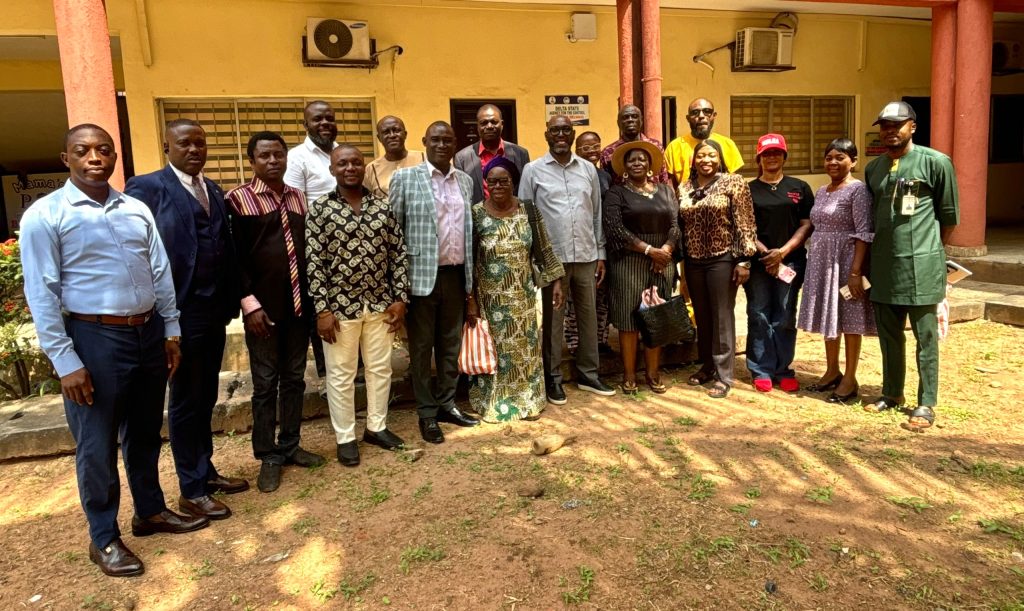
NHRC Calls for Collaborative Efforts to Protect Persons Who Report Human Rights Violations
By Magnus Emuji
The need for collaborative efforts to protect the confidentiality and safety of persons who report violations, prevent retaliation against complainants and witnesses, and ensure that response mechanisms are accessible, non-judgmental, and responsive to the specific needs of affected populations has been brought to the fore.
The Executive Secretary/Chief Executive Officer of the National Human Rights Commission (NHRC), Dr. Tony Ojukwu, OFR, SAN, stated this at a One-Day State-Level Sensitisation Workshop on the Emergency Response Framework to Reduce Human Rights Violations, held in Asaba for representatives of government institutions, law enforcement agencies, healthcare providers, legal service providers, civil society organisations, community-led organisations, and members of key and vulnerable populations.
Represented by the State Coordinator, Mr. Chia Shaku Nor, the NHRC boss commended participants for their commitment to advancing the protection of human rights, dignity, and access to essential services for marginalised groups.
He said key and vulnerable populations remain among the groups most exposed to stigma, discrimination, exclusion, violence, and other human rights challenges.
Dr. Ojukwu listed them to include people living with HIV, people affected by tuberculosis, persons who use and inject drugs, female sex workers, men who have sex with men, transgender persons, and other vulnerable and underserved communities.
According to him, emergencies affecting these populations may arise from violence, unlawful arrest and detention, harassment, forced eviction, discrimination in healthcare settings, denial of access to essential health services, breach of confidentiality, community hostility, and other threats to their safety, dignity, and fundamental rights.
He said such situations require timely, coordinated, and effective interventions that are sensitive to the peculiar circumstances of affected populations and firmly grounded in human rights principles.
Dr. Ojukwu described the Emergency Response Framework as a critical mechanism for ensuring that incidents of human rights violations and other emergencies affecting key and vulnerable populations are identified, reported, documented, and addressed promptly and effectively.
He explained that the Framework seeks to strengthen coordination among stakeholders, establish clear response and referral pathways, improve access to legal assistance and psychosocial support, enhance incident documentation and reporting, and promote accountability for violations.
He further stressed that access to healthcare and other essential services must not be denied on the basis of a person’s health status, identity, occupation, or perceived social standing.
The NHRC Executive Secretary noted that the successful implementation of the Framework depends largely on the capacity and commitment of stakeholders at the sub-national level, and urged all participants to understand their respective responsibilities under the Framework.
He particularly encouraged stronger collaboration with community-led organisations, noting that they often serve as the first point of contact for affected individuals and are strategically positioned to identify incidents, facilitate referrals, and provide immediate support.
Dr. Ojukwu reaffirmed the Commission’s commitment to working with relevant government institutions, development partners, civil society organisations, and community-led networks to ensure that the rights of key and vulnerable populations are protected in line with the Constitution of the Federal Republic of Nigeria, applicable national laws, and international human rights standards.
He expressed confidence that the outcome of the engagement would strengthen collective response capacity and contribute to building a more inclusive, accountable, and rights-respecting environment for key and vulnerable populations in Nigeria.
Earlier in his presentation on the Emergency Response Framework (ERF) for the Protection of the Human Rights of Key and Vulnerable Populations in Nigeria, the State Coordinator, Mr. Chia Shaku Nor, said the Framework translates human rights commitments into practical action, providing a coordinated mechanism to prevent, identify, report, assess, refer, document, and respond to violations affecting key and vulnerable populations, instead of fragmented or ad hoc interventions.
Nor explained that the Framework provides tailored protection for people living with HIV, people who use or inject drugs, men who have sex with men, sex workers, transgender persons, survivors of gender-based violence, persons in detention, internally displaced persons, children and adolescents, persons with disabilities, and other groups experiencing heightened vulnerabilities, across homes, streets, schools, workplaces, health facilities, police cells, correctional centres, shelters, IDP camps, community spaces, and online environments.
He listed violations covered to include arbitrary arrest, unlawful detention, torture and other forms of ill-treatment, sexual and gender-based violence, harassment, extortion, blackmail, intimidation, discrimination and denial of access to healthcare, forced HIV testing, unauthorised disclosure of HIV status, interruption of treatment, forced eviction, and retaliation, warning that delayed reporting exposes victims to further harm, loss of essential services, exposure of sensitive information, and barriers to justice.
Nor explained that the NHRC is the lead institution coordinating the Framework, with State Offices serving as frontline access and response points, while Headquarters provides strategic direction, legal support, inter-agency engagement, oversight, and escalation.
He stated that the Framework operates through a three-tier system: Tier 1 – Routine, for cases without imminent threat to life, liberty, or security, handled through standard complaint procedures; Tier 2 – Urgent, for cases involving imminent threat, detention without legal or medical assistance, or time-critical healthcare needs, with response within 24–48 hours; and Tier 3 – Emergency, for mass arrests or raids, mob violence, multiple victims, or systemic abuse, with immediate activation and an initial situation report within 4 hours.
He told stakeholders that every report will follow six steps: Receive, Screen & Assess, Classify, Act & Coordinate, Refer Safely, and Document & Follow Up, guided by do-no-harm and survivor-centred practice, confidentiality, informed consent, non-discrimination, and accountability.
Nor stressed that the voices and lived experiences of key and vulnerable populations must remain central, adding that nothing about these populations should be done without meaningful engagement with them.
He reaffirmed the Commission’s commitment to working with government, development partners, civil society, and community-led networks to ensure their rights are protected in line with the Constitution and international human rights standards.
Nor urged members of the public can report violations to the NHRC by visiting No. 19 Aguiyi Ironsi Street, Maitama, Abuja, or any NHRC State Office, calling toll-free 6472, emailing nhrcanigeria@gmail.com, or visiting http://www.nhrc.gov.ng.