On the occasion of Nigeria’s Children’s Day, a globally recognised Data and AI literacy advocate is sounding the alarm over the widening education gap in Delta State, urging Governor Oborevwor to invest boldly or risk leaving a generation behind in a fast-moving digital world.
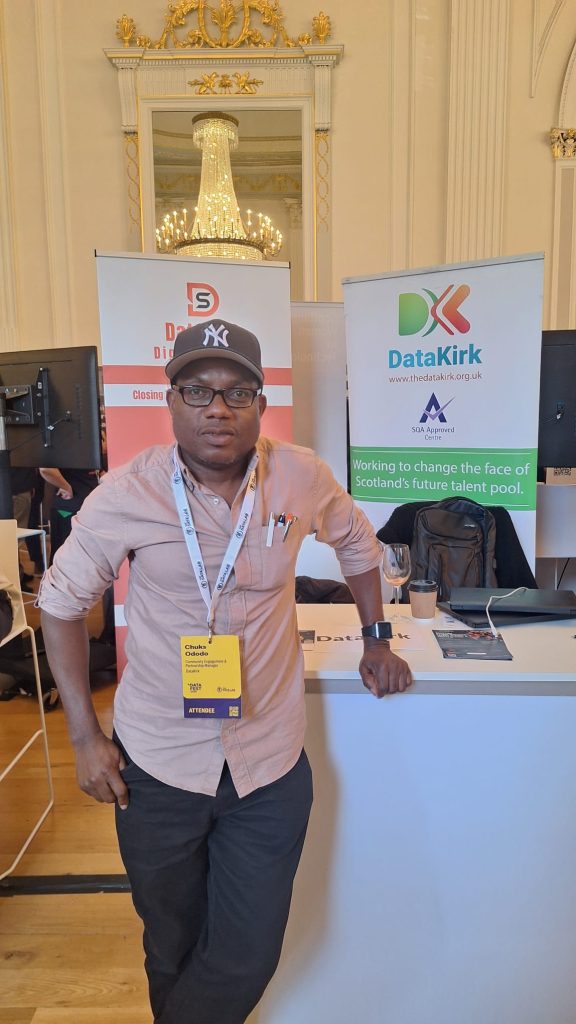
Every 27 May, Nigeria pauses to celebrate its most precious asset, its children. Schools hold competitions, families take photographs, and politicians deliver speeches. But for Ambassador Chuks Ododo, co-founder of DataKirk, a Scotland-based non-profit organisation working tirelessly to close digital and attainment gaps for underserved communities, Children’s Day 2026 carries a far more urgent message: the future of Delta State’s youth hangs in the balance, and time is running out to act.
In a powerful statement that cuts through the noise of celebratory fanfare, Ambassador Ododo has directed a pointed and impassioned call to the Delta State Governor, Rt. Hon. Sheriff Oborevwor, urging him to place education, particularly skills-based, technology-driven education, at the very heart of his administration’s developmental agenda.
“No state or country can achieve its developmental potential without prioritising education and skills. Roads and bridges are visible wins, but education is the foundation upon which every other achievement is built.”
— Ambassador Chuks Ododo, Co-founder, DataKirk
A World Racing Ahead — Classrooms Left Behind
The contrast Ambassador Ododo paints is stark. Across the developed world, including Scotland, where DataKirk operates, children as young as six are learning with tablets, coding tools, and AI-assisted platforms. Digital literacy is no longer a supplementary skill; it is the bedrock of modern education. Meanwhile, back home in Delta State, many public primary and secondary schools are wrestling with shortages of qualified STEM teachers, a lack of internet infrastructure, bare walls where smart boards should hang, and non-existent e-libraries.
This is not merely an inconvenience it is an economic and social crisis in the making. Ambassador Ododo’s lived experience, bridging communities in Scotland and tracing roots to the Niger Delta, lends him a perspective few others can claim: he has seen what happens when digital exclusion goes unaddressed, and he has equally seen what transformative investment in skills can achieve.
63%of Delta youth are underemployed or unemployed, per recent regional labour data
10%of public secondary schools in the Delta have reliable internet connectivity.
2030, the year by which 85% of jobs will require digital skills, per the World Economic Forum
The Certificate Trap: Educated but Unprepared
At the core of Ambassador Ododo’s argument is a structural critique of Nigeria’s education model, one that is painfully familiar to anyone who has navigated the job market in recent years. Delta State’s schools, he argues, have long prioritised the pursuit of certificates over the cultivation of practical, market-relevant skills. Students graduate knowing how to pass examinations but not knowing how to solve problems, collaborate digitally, or adapt to the demands of a 21st-century workplace.
“Many of our Delta youths are not employed because our schools are more certificate-based instead of skills-based,” Ododo stated plainly. It is a damning but honest indictment. In an era when employers globally, from Abuja tech start-ups to Edinburgh fintech firms, are screening for competencies in data analysis, digital communication, project management, and critical thinking, a certificate alone is increasingly insufficient currency.
DataKirk’s model in Scotland offers a blueprint: by combining community trust with structured digital skills training, mentorship, and industry linkages, the organisation has demonstrated that underserved communities, when given the right tools and environment, can leapfrog traditional barriers. Ambassador Ododo believes Delta State can do the same, at scale, if the political will exists.
A Concrete Agenda for Governor Oborevwor
Ambassador Ododo is not simply raising concerns; he is presenting a challenge with a practical roadmap attached. His call to Governor Oborevwor is structured around four urgent imperatives that, if acted upon decisively, could begin to transform Delta’s educational landscape within a single electoral cycle.
First, increase the education budget substantially. Delta State must move beyond modest allocations and make education a genuine fiscal priority. Infrastructure for digital learning broadband in classrooms, smart boards, and device programmes for students requires consistent, ring-fenced investment. A higher education budget is not spending; it is the most strategic investment a government can make.
Second, train and recruit qualified teachers. Particularly in STEM subjects, science, technology, engineering, and mathematics, Delta’s schools are haemorrhaging talent and struggling to attract it. Competitive remuneration packages, professional development programmes, and partnerships with universities can begin to reverse this. Ododo’s vision includes teachers who are themselves digitally literate and capable of inspiring the next generation of coders, engineers, and data scientists.
Third, connect private investment to public education. The private sector has both the resources and the incentive to build tomorrow’s workforce. Ambassador Ododo calls for structured public-private partnerships that bring technology companies, financial institutions, and diaspora networks into an active role in shaping Delta’s schools. Sponsorships of innovation labs, coding clubs, and vocational training centres can supplement government investment and, introduced STEM Club, established Tech/AI innovation Hub in each local government, introduce students to real-world industry expectations.
Fourth, prioritise primary and secondary schools equally. Investment in tertiary education often captures the headlines, but Ododo’s message is clear: the foundation must be laid early. Children who do not encounter quality STEM education in primary school rarely find their way to it later. Delta’s investment strategy must follow the child’s journey and begin at the very beginning.
“Infrastructural development, roads and bridges are very good. But education remains one of the critical components of accessing a thriving economy and a performing government.”
— Ambassador Chuks Ododo
The Diaspora as Delta’s Bridge
There is a particular poignancy to Ambassador Ododo issuing this call from the United Kingdom. He represents a growing cohort of Delta indigenes who have built distinguished careers abroad and remain profoundly invested in the development of their home state. DataKirk’s work in Scotland directly addressing the digital exclusion of marginalised communities, shaping future-of-work skills, and championing STEM leadership among young people is precisely the kind of model Delta needs to study, adapt, and implement.
The diaspora is not a population that has abandoned Delta; it is a resource waiting to be engaged. Ododo’s public appeal on Children’s Day is itself a bridge-building act one that signals the readiness of Delta’s global community to contribute expertise, networks, and investment, provided the government creates the enabling environment to receive them.
Children’s Day as a Call to Accountability
Children’s Day should be more than a public holiday. It should be an annual reckoning, a moment when governments are held to account for what they have, and have not, done for the youngest citizens in their care. Ambassador Ododo’s statement reframes the celebration as a challenge: celebrate our children by committing, concretely and measurably, to the systems that will determine the quality of their lives.
Delta State is not without promise. It possesses natural resources, a youthful population, and a vibrant diaspora. But resources without human capital produce dependency, not development. Skills without infrastructure produce frustration, not progress. What is needed urgently is a Governor who sees beyond the ribbon-cutting of roads and dares to make the deeper, less visible, but far more enduring investment in the minds of Delta’s children.
Ambassador Chuks Ododo has issued his call. The question now is whether Governor Oborevwor will answer it not with a press release, but with a budget line, a recruitment drive, a fibre cable, and a smart board on the wall of a classroom in Asaba, Warri, Sapele, and every community in between.
Delta’s children are waiting. And on this Children’s Day, they deserve more than celebration. They deserve action.
About the Author